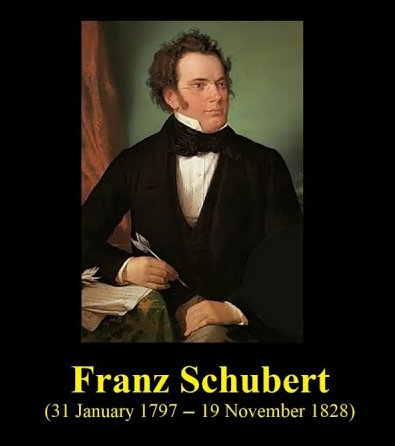
Franz Schubert's Mass No. 2 in G major (D. 167) is one of his best-loved sacred works, composed in 1815 when he was just 18—reportedly in under a week. He wrote it for the parish church in Lichtental, Vienna, where he had grown up singing as a choirboy.
Compared to his later, grander masses, this one is modest and intimate: scored for soloists, choir, strings, and organ, without the elaborate orchestration of a full concert mass. Its character is lyrical and warm, showing the same melodic gift that made Schubert famous as a song composer, translated into a devotional setting.
The mass follows the traditional structure—Kyrie, Gloria, Credo, Sanctus, Benedictus, Agnus Dei—though, like several of his masses, it omits a few words from the Credo (notably the reference to the "one holy catholic and apostolic church"), a detail scholars still debate.
Thanks to its manageable scale and gorgeous, songful melodies—especially the tender Benedictus—it remains one of Schubert's most frequently performed masses, popular with church choirs and smaller ensembles alike.
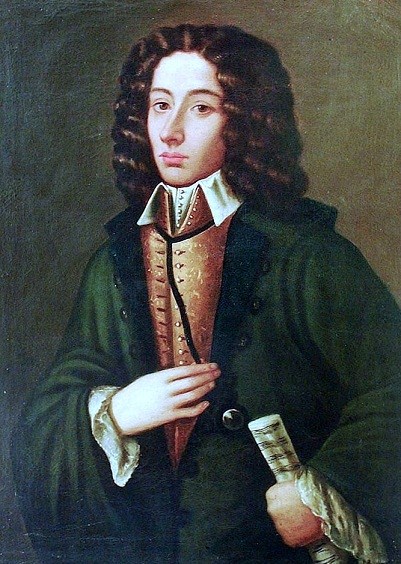
The Magnificat popularly known as "Pergolesi's Magnificat" is a case of mistaken identity in music history. Though scholars traditionally agreed the work was composed by Francesco Durante (1684–1755), musicologist Giuseppe Radicciolli attributed it to Durante's pupil Giovanni Battista Pergolesi in 1910, and that misattribution has stuck ever since. A signed manuscript housed in Naples has since proven Durante as the true composer. Alfred Music
Durante likely composed the work in the 1740s, existing in both a four-part version and a more elaborate five-part setting with two sopranos. The piece unfolds in six movements, opening with the sopranos presenting a Gregorian cantus firmus that leaps between voices, decorated with running passages. Written for choir, soloists, strings, and organ, it sets the traditional Magnificat text (Luke 1:46–55) with a blend of Baroque polyphony and early Classical style.
Despite the attribution controversy, the work remains among the most familiar pieces of 18th-century Italian sacred music, prized for its warmth and dramatic contrasts—gentle soloistic dialogue giving way to forceful choral outbursts. Many recordings and programs still credit it to Pergolesi, so listeners often encounter it under either name.
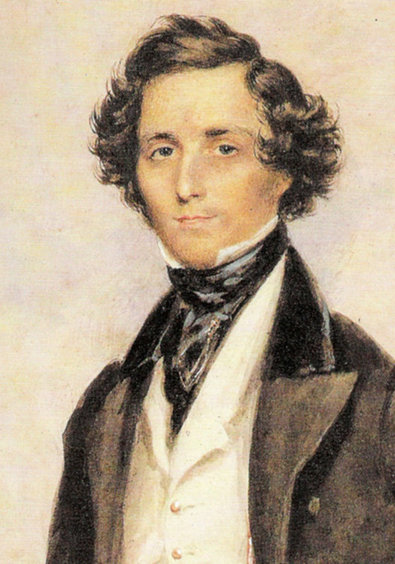
"When Jesus Our Lord" (from Christus, Op. 97)
This is the opening soprano recitative of Christus, Mendelssohn's unfinished oratorio, left incomplete at his death in 1847. He had spent nearly a decade searching for a suitable oratorio text on the life of Christ, but only fragments survive: a "Birth of Christ" section and a "Passion of Christ" section, including a trio for male soloists, several recitatives and choruses, and a chorale setting. The work was published posthumously in 1852 as Op. 97. The completed portions include a tenor—more precisely soprano—recitative relating Christ's birth, two choruses on the newborn king, using Philipp Nicolai's chorale "Wie schön leuchtet der Morgenstern," and a passion section ending with another chorale. Despite being a fragment, the opening movements—the recitative "When Jesus our Lord…," the trio "Say, where is he…?," and the chorus "There shall a star…"—remain popular with church choirs for the Feast of the Epiphany.
"Hear My Prayer"
Composed in 1844 and dedicated to his composer-friend Wilhelm Taubert, this sets the opening verses of Psalm 55, conceived by Mendelssohn as a miniature cantata. It was written at the request of William Bartholomew for a series of concerts at Crosby Hall, London, for singer Ann Mounsey (who later married Bartholomew). It premiered at Crosby Hall on 8 January 1845, with Mounsey herself at the organ. The piece unfolds as three contrasting movements linked by a recitative: it opens with the sopranos' simple plea, "Hear my prayer, O God," moves through a turbulent Allegro depicting rising fear and despair, and after a final impassioned recitative arrives at its famous closing movement. That closing movement, the soprano aria "O for the Wings of a Dove," became so beloved that Mendelssohn later published it separately—it remains one of his most enduringly popular pieces, especially treasured in the Victorian choral tradition.
